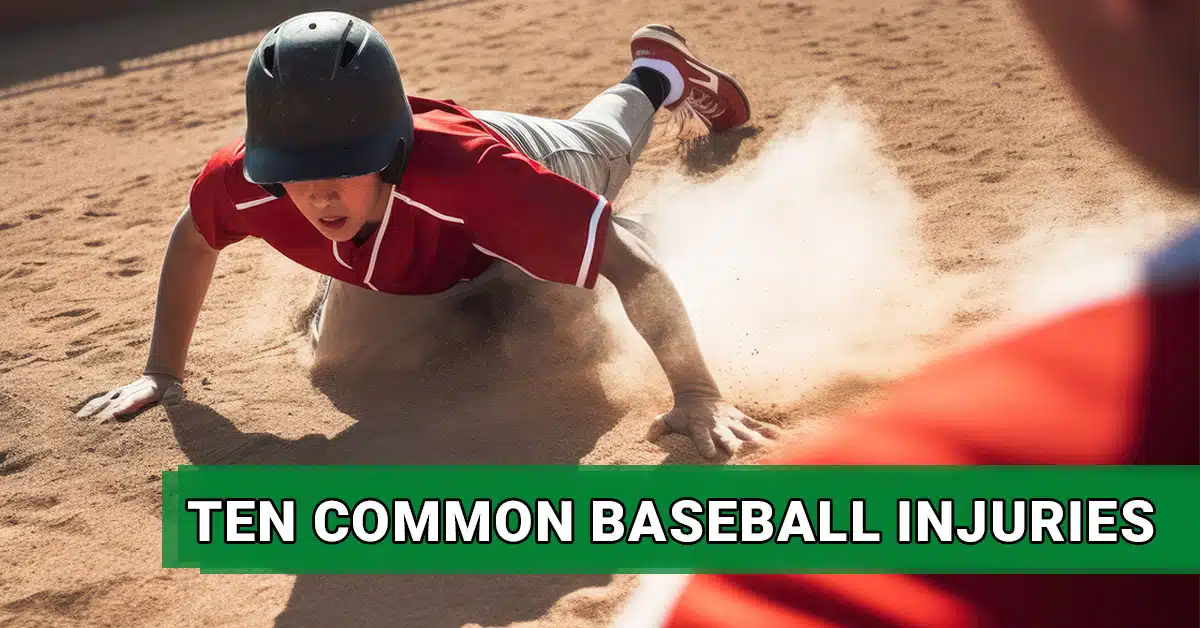
10 Common Youth Baseball Injuries (and How Parents Can Help Prevent Them)
Last modified on: 11 May 2026
5 minute read
Baseball is a safe and fun sport for kids, but as with any athletic activity, injuries can happen. The combination of , growing bodies, repetitive throwing, and long seasons makes youth players especially vulnerable to certain types of injuries.
But there is good news. Many of the most common youth baseball injuries are preventable with proper training, rest, and awareness.
Here are the 10 injuries parents and coaches should understand and how to help keep young players healthy all season long.
Shoulder Injuries (Rotator Cuff Strain)
Young players, especially pitchers, put repeated stress on their shoulders. Over time, this can lead to irritation or small tears in the rotator cuff.
Signs to watch for:
Shoulder soreness after throwing
Reduced throwing strength
Complaints of tightness or fatigue
Prevention tips:
Follow age-appropriate pitch count limits
Encourage proper warm-ups
Avoid year-round throwing without breaks
2. Labrum Injuries
The labrum helps stabilize the shoulder joint, but it can be damaged from repeated throwing, especially with poor mechanics.
Signs to watch for:
Deep shoulder pain
Loss of throwing velocity
“Loose” or unstable feeling in the arm
Prevention tips:
Focus on proper throwing mechanics
Avoid overuse (especially pitching and catching in the same game)
Build arm strength gradually
3. UCL Injuries
The ulnar collateral ligament (UCL) stabilizes the inner elbow and is critical for throwing. One of the most common youth baseball injuries is elbow pain caused by overuse. In severe cases, this can lead to UCL damage (the injury associated with Tommy John surgery).
Signs to watch for:
Pain on the inside of the elbow
Trouble throwing accurately
Complaints of arm fatigue
Prevention tips:
Stick to pitch count and rest guidelines
Avoid breaking balls (curveballs/sliders) at young ages
Take at least 2–3 months off from throwing each year
Repetitive throwing can inflame tendons around the elbow, causing ongoing discomfort.
Signs to watch for:
Pain on the inside or outside of the elbow
Weak grip strength
Pain when throwing or lifting
Prevention tips:
Don’t ignore early soreness
Build arm strength with proper conditioning
Ensure proper throwing technique
5. Hand & Wrist Injuries
Young players often get hit by pitches or jam their hands while batting or fielding. A growing concern in youth baseball is hamate bone injury, which affects grip strength.
Signs to watch for:
Wrist pain after batting
Difficulty gripping the bat
Swelling or tenderness
Prevention tips:
Use proper batting gloves and equipment
Teach correct grip and swing mechanics
Encourage players to speak up about pain
6. Knee Injuries (Meniscus Tears)
Quick movements like sliding, pivoting, and fielding can strain the knee.
Signs to watch for:
Knee pain or swelling
Locking or stiffness
Trouble bending or straightening the leg
Prevention tips:
Teach proper sliding technique
Strengthen leg muscles
Avoid overplaying without rest
7. ACL Injuries
Though less common in baseball than other sports, ACL injuries can still happen during sudden stops or awkward landings.
Signs to watch for:
A “pop” in the knee
Immediate swelling
Instability when walking or running
Prevention tips:
Emphasize balance and agility training
Encourage proper footwear
Avoid playing on unsafe or uneven fields
8. Concussions & Head Injuries
Head injuries usually happen from collisions or being hit by a ball.
Signs to watch for:
Dizziness or confusion
Headaches
Nausea or sensitivity to light
What parents should do:
Remove the player immediately if a concussion is suspected
Follow return-to-play protocols
Never rush recovery
9. Muscle Strains (Hamstring, Quad, Back)
Muscle strains are extremely common in youth baseball due to sprinting, swinging, and throwing.
Signs to watch for:
Sudden pain during movement
Tightness or soreness
Limping or reduced mobility
Prevention tips:
Stretch before and after games
Stay hydrated
Avoid playing through pain
10. Ankle Sprains
Running bases and fielding can lead to rolled or twisted ankles.
Signs to watch for:
Swelling around the ankle
Pain when walking or running
Limited range of motion
Prevention tips:
Strengthen ankles with simple exercises
Teach proper running and cutting technique
Ensure cleats fit properly
How Parents Can Help Prevent Youth Baseball Injuries
The biggest difference between healthy and injured players often comes down to awareness and habits.
Here’s what matters most:
Prioritize rest: Kids shouldn’t play year-round without breaks
Follow pitch count rules: Especially important for young pitchers
Encourage honesty: Make sure your child feels comfortable reporting pain
Focus on fundamentals: Good mechanics reduce stress on the body
Don’t rush recovery: Returning too soon leads to bigger injuries
Final Thoughts for Parents
Most youth baseball injuries don’t happen from one bad play. They develop over time due to overuse, fatigue, or improper mechanics.
By staying proactive and paying attention to early warning signs, parents and coaches can help young athletes stay healthy, confident, and excited to play.
A little prevention goes a long way in keeping kids on the field and out of the doctor’s office.
Sign up to our newsletter
Get the latest articles on our news and promo discount delivered straight to your inbox
There are many different factors that go into creating the perfect pitcher. In fact, creating the perfect pitcher is probably not possible. Having said that, it is possible for a guy to hone his skills and create a perfect pitch. There have been many pitchers who have gone entire decades dominating the entire league, and […]
Are you looking for a meaningful way to celebrate your team’s season, build camaraderie, and create lasting memories? Custom baseball trading pins are one of the most popular and enduring traditions in youth and competitive baseball. Since their introduction at the 1896 Summer Olympics, trading pins have become a staple at a wide variety of […]
One of the many benefits of little league baseball is its ability to inspire confidence in children. Learn everything you need to know about this here!
With so many kids wanting to stay inside and play with their electronics, it's hard to get them moving. Here are 8 reasons why youth baseball may be the answer! In recent years, youth baseball has been forced to compete with several other sports while trying to win over the hearts of kids everywhere. […]